
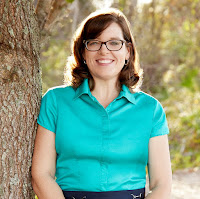
Today we continue the series in which award-winning nonfiction authors discuss the joys and challenges of writing narrative nonfiction and expository nonfiction with an essay by Jennifer Swanson. Thank you, Jennifer.
Are you a fan of the TV game show Jeopardy!®? I grew up watching it.
One of the many reasons I love the show is that you learn tons of information about many different topics, but it’s all delivered in tiny bite-sized bits.
Why am I talking about a game show in an essay that’s supposed to be about writing expository nonfiction? Because I see expository books as a way for kids to learn a bunch of facts about one topic—just like you do on the TV show. That’s why it’s no surprise that one of the most successful Jeopardy!® contestants ever, James Holzhauer, said he read a ton of nonfiction kids’ books (including one of mine!) to prepare for the show.
The majority of my books have an expository writing style because I’m still a “fact kid.” I read to learn.
Plus expository writing works well for books about STEM (science, technology, engineering, and math) topics when there’s no built-in storyline. And I tend to write about physical science, engineering, and technology. These topics can be challenging for some kids, but by using an irresistible hook, writers can engage even the most reluctant kids.

A good example of this is Beastly Bionics: Rad Robots, Brilliant Biomimicry, and Incredible Inventions Inspired by Nature. This book gives the reader a peek inside the creative process of engineers and scientists as they design biotech products based on animals.
Sound complicated? It can be, but when the information is presented in small, expository bites, it’s accessible and digestible to readers.
The key to writing expository books is the structure. Beastly Bionics features one invention per spread with five different sections to describe the design process.


See how the short sections make the spread easy to navigate? Younger kids can look at the images of the animals and robotics and make comparisons. Older kids get enough information to pique their curiosity and encourage them to do their own research to learn more.
To keep readers engaged, I used short, snappy titles and specific wordcounts for each section. For example, the Did You Know? section always has less than 20 words. The Going Further section was between four and seven sentences.
The main challenge to creating this book was the layout. Sometimes I had to cut words so that the text fit into the spaces around the amazing photos. As I did this, the language became more concise and energetic.

As I was writing Secret Science of Sports: The Math, Physics, and Mechanical Engineering Behind Every Grand Slam, Triple Axel, and Penalty Kick, the goal was to show how sports and STEM go together, well, like a baseball and bat. You can’t have one without the other.
This book contains some pretty in-depth explanations, so you could think of it as presenting two or three categories of Jeopardy!® all at once. The awesome illustrations by Laurène Boglio engage the reader by showing STEM in action—throwing a ball through the air, kicking a soccer ball across a field, or hitting a baseball over a fence. To add even more STEM-in-action appeal, I included a bunch of activities for readers to do while they are reading.


The biggest selling point of this book is the upbeat, conversational voice and use of direct address. Here’s an example:
If you picked up this book, it’s probably because you like sports. Maybe you want to see if it has tips for how to improve your game (it does), or how to become more fit (it has that, too), or just because you want to learn more about different types of sports (also there).
It’s fun, right? And inviting. Just right for the target audience.
Expository books are perfect for the curious reader, the reluctant reader, or even the reader who just isn’t sure what they like. In particular STEM expository books offer a peek into the amazing world of science, technology, engineering, and math that just might be the one nudge a kid needs to inspire them to learn more. And, who knows, perhaps one day be a contestant on Jeopardy!®
Jennifer Swanson is the award-winning author of more than 45 books for children. Her awards include: two Florida Book Awards, a Parent’s Choice GOLD award, and multiple NSTA BEST STEM awards. Jennifer is the founder of the STEM Tuesday blog, STEAMTeamBooks, and the Solve It! for Kids podcast. She has presented at NSTA conferences, the Atlanta Science Festival, the World Science Festival, and the Library of Congress’ National Book Festival.
2 Responses
yay for fact-hungry kids! I think we grew up to be curious adults. I, too, loved it when James Holzhauer said he'd read tons of kid's books.
You are a rock star, Jen! I'm not surprised James read one of your books! Hooray for Jeopardy fans. 😀