Recently, award-winning STEM author Jennifer Swanson let me know about an innovative idea that she’s working on—Text Trios. She’s pairing a book with a narrative writing style and a book with an expository writing style with episodes of her popular podcast Solve It for Kids.
I was so excited about how these trios could appeal to a broad range of students with different learning styles that I asked Jen to share what she’s up to here. Thanks, Jen, for everything you’re doing to get kids fired up about reading and learning.
Young children are naturally curious. They’re excited to soak up ideas and information about the world and how it works and their place in it. Some students remain passionate about the quest for scientific knowledge as they grow older, while others need our support to keep their enthusiasm alive. In either case, books have an important role to play.
Sometimes the best way to keep kids engaged in science, technology, engineering, and math (STEM) is by helping them see themselves as scientists and engineers. Picture book biographies can do this by showing students that people who look like them, think like them, and share their interests have chosen STEM careers and are making important contributions to the world. And because most biographies have a narrative writing style, these books appeal strongly to readers who are naturally drawn to stories and storytelling.

Other students prefer fact-filled books with clear, straightforward expository writing. The ideas and information in these books may answer questions they have right now. Or they might encourage readers to narrow their focus and dig deeper. And as these students continue to read and explore and discover, they may develop new ways of seeing the world.
One great way to satisfy both kinds of readers—those who prefer narratives as well as those who connect more strongly to expository writing—is book pairs. And to further enrich your students’ journeys of discovery, consider using Text Trios that include a book pair plus a podcast episode on the same topic.
Many podcasts are structured as interviews that include personal information about the interviewee as well as their professional background and a discussion of their important work. This combination makes the podcast a perfect bridge between a biography and a fact-filled book about a particular topic.

As the creator and host of the podcast Solve It for Kids, I’ve seen the power of podcasts firsthand. Here are some of their benefits.
—Podcasts can highlight up-to-the-minute discoveries—something books just can’t do.
—Students realize that scientists are real people who talk and think just like them and that science is happening right now all around them.
—Listening to a scientist or engineer talk about their job and how they solve problems gives students tangible examples of the growth mindset in action.
—Sharing information through a range of media is emphasized by most state-mandated ELA standards.
—Podcasts give students an opportunity to practice their listening skills.
For all these reasons, Text Trios that include podcast episodes as a listening experience make a lot of sense. This multi-faceted approach allows all types of learners to feel supported.
Here are some examples.

Text Trio #1: Whales
For a fascinating look at whales, their role in the ocean environment, and the tiny critters that live on and inside them, students can explore the books The Spirit of Springer: The Real-Life Rescue of an Orphaned Orca by Amanda Abler and Levi Hastings and Whale Fall: Exploring an Ocean-floor Ecosystem by Melissa Stewart and Rob Dunlavey along with the Solve It for Kids episode “Do Whales have Germs?” with Dr. Amy Apprill of Woods Hole Oceanographic Institution.

Text Trio #2: Finding & Studying Fossils
For a deep dive into fossils and how they help us learn about ancient life on Earth, students can read about the ground-breaking work of Mary Anning in Dinosaur Lady: The Daring Discoveries of Mary Anning, the First Paleontologist by Linda Skeers and Marta Álvarez Miguéns, listen to the Solve It for Kids episode “How Do We Know Dinosaurs Could Fly?” with paleontologist Dr. Jingmai O’Connor of The Field Museum in Chicago, and then look for fossils themselves with the assistance of Rock, Fossil, and Shell Hunting: The Definitive Interactive Nature Guide by Jennifer Swanson and John D. Dawson.

Text Trio #3: Codes and Coding
To help students make a connection between wartime secret codes, DNA—the biological code that makes our lives possible, and computer coding, encourage them to read Code Breaker, Spy Hunter: How Elizebeth Friedman Changed the Course of Two World by Laurie Wallmark and Brooke Smart and The Secret Code Inside You: All About Your DNA by Rajani LaRocca and Steven Salerno. Then they can listen to the Solve It for Kids episode “How Do You Talk to a Robot?” with Dr. Carlotta Barry, an electrical and computer engineer.

Text Trio #4: Black Holes
Students who want to know more about black holes and the scientists who study them can read A Black Hole is Not a Hole by Carolyn Cinami DeCristofano and Michael Carroll and Black Hole Chasers: The Amazing True Story of an Astronomical Breakthrough by Anna Crowley Redding. Then for a fascinating look at current research, they can listen to the Solve It for Kids episode “How Do Scientists Listen to Black Holes?” with Dr. Eric Thrane, astrophysicist and cosmologist.
You can create Text Trios too. Scan through past Solve It for Kids episodes to find podcasts that can enrich your existing curriculum or that you think students will enjoy listening to on their own.
Let’s get kids excited about STEM and encourage them to begin their own journeys of discovery. Text Trios are a great way to inspire the next generation of inventors, explorers, engineers, and scientists.
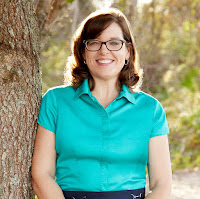
Jennifer Swanson is the award-winning author of more than 50 books for children. Her awards include three Florida Book Awards, a Parent’s Choice GOLD award, a Kirkus Best Book of 2021, AAAS/Subaru Prize semifinalist, and multiple titles on the NSTA Best STEM list. Jennifer is the founder of the STEMTuesday blog, STEAMTeamBooks, and the Solve It! for Kids podcast. She has presented at NSTA conferences, the Atlanta Science Festival, the World Science Festival, and the Library of Congress’ National Book Festival.