Back in October, I joined Bluesky,
and it’s helped me connect to a whole new group of fabulous educators. One of
them is K-5 teacher-librarian Christopher
Hunt, who wrote today’s post. Thanks for sharing
your experiences, Chris.
Despite
the fact that some prominent publications don’t acknowledge or review
children’s nonfiction, it’s an absolute fact that #KidsLoveNonfiction. Anybody
in the library world sees proof of it every day. Many student patrons only
check out nonfiction, week after week. That’s why I make it my mission to purchase
eye-catching nonfiction that looks fantastic on display.
Over
the years, the rise of internet research has lessened the need for traditional
nonfiction somewhat, motivating publishers to take risks on new kinds of nonfiction
with finely-crafted text and incredibly rich artwork. At the same time, books featuring
photography have also dramatically increased in artistic quality.
The
quality of the information is improving too (whether it’s intriguing tidbits or
more in-depth coverage). And trim sizes have increased, which kids just love. I
often joke that some of the books are almost as big as the students checking
them out. This makes the kids’ eyes light up, and they say, “I know, right!
Isn’t that cool?!”
Lightbulb Moment: 5 Kinds of
Nonfiction
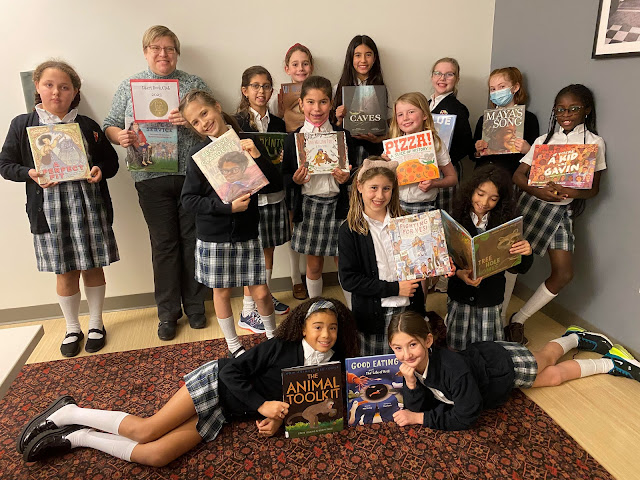
I’d been noticing all of these changes over the last decade or so, but hadn’t put
words to the different formats. Then I started reading social media posts by
Melissa Stewart about the 5 Kinds of Nonfiction classification system, and a
lightbulb went off. This was a way to talk about what I was noticing. I
purchased 5 Kinds of Nonfiction: Enriching Reading and Writing
Instruction with Children’s Books, co-authored by Marlene Correia, and
immediately knew I wanted to pitch some team-teaching lessons to my
colleagues—but where to start?
Teaching Nonfiction Lessons
In
the past, I’ve team-taught lessons focusing on nonfiction text features
followed by a research and writing project of some sort, but this year, I
wanted to move beyond that. My goal was to teach students (and teachers) to
recognize the 5 Kinds of Nonfiction (Traditional, Active, Browsable, Expository
Literature, and Narrative), so they had the vocabulary to identify book
characteristics and could understand the best ways to use each category of
book. Traditional nonfiction is well suited for the early stages of research,
while browsable books work better later in the process. Expository literature
makes great mentor texts for informational writing, while active nonfiction is
perfect for modeling procedural writing.
I
decided to start with genre tastings. In the past, I’d transformed the library
to look like a restaurant with tables that feature “taste test” bins of fiction
genres such as realistic fic, sci-fi, fantasy, scary stories, etc. Each participant
used a “menu” to make notations about the genres they sampled. This year, I created
a 5 Kinds of Nonfiction Tasting Café instead.
As soon as I let grade 3, 4, and 5 teachers know that I’d earmarked a half
dozen blocks for this exploration, they began signing up their classes.
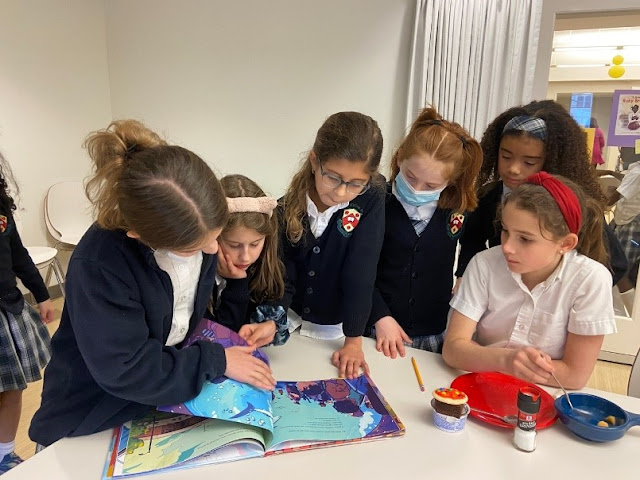
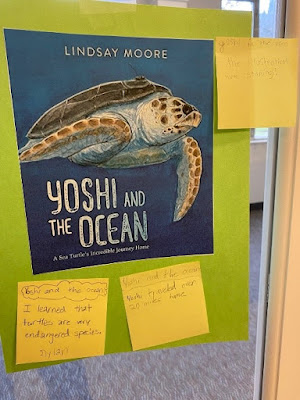
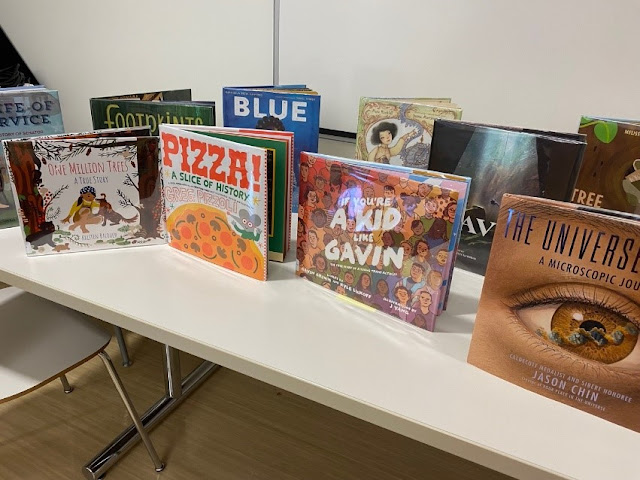
Set Up for the 5 Kinds of Nonfiction
Book Tasting Café
● Already had checkered
tablecloths and placemats
● Pulled books and binned them
according to category
● Made table signs
explaining each of the 5 types in student-friendly language
● 5 tables, a bin and 5 place
settings at each table
● Menus for students to
record their observations, accordion folded, ready on place settings as a class
arrives
● Low lightsand/or quiet music,
if you wish
● Rotating stations, approximately
8-10 min at each one
● Time at the end to vote on a
super fave title from the exploration and sign it out as a bonus
● Students keep menus for next
visit to the library to help them find/remember other fave titles
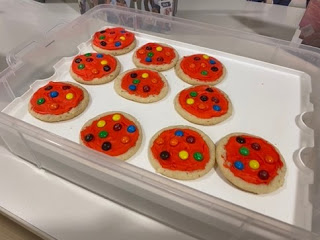
Reflections and Next Steps
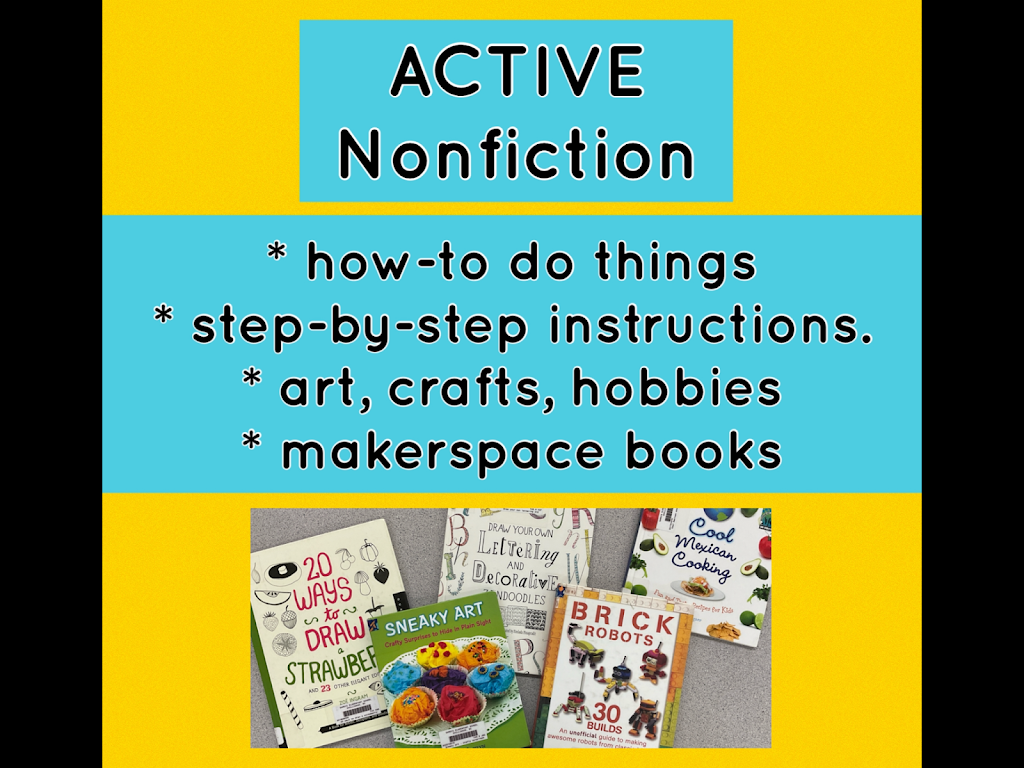
Active
nonfiction has always been popular at my school, so I’ve had a separate space
for these books in my makerspace area for quite a few years. This category
includes how-to books and anything related to hands-on creating—arts and
crafts, sewing, coding, drawing, magic, origami, Illustoria magazines,
Minecraft, LEGO, cookbooks. It was no surprise that many students loved books
at that station. Because this activity highlighted the full range of active
nonfiction in our collection, some students tried out something new afterward.
I
noticed a strong appreciation for the narrative nonfiction books across the
ages/grades. They seem to hit a sweet spot by blending intriguing facts,
inspiring artwork, and interesting storytelling. Often, students who are less
excited about nonfiction liked this category best; whereas, kids who are less
excited about fiction really enjoyed the narrative mode applied to something
packed with facts.
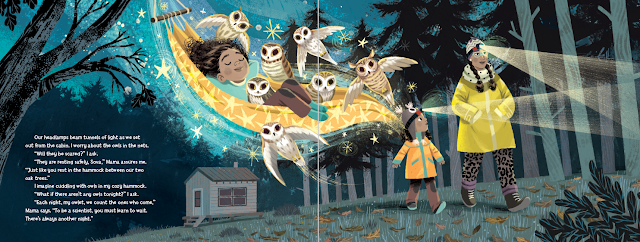
Because narrative nonfiction books seemed to have the most crossover appeal, I decided they should be easier for students to find. I’m planning to pull these titles
from their current locations and create a new home for them make them between
the picture book corner and the nonfiction corner. Then I’ll put up signage and
promote this section. As the books get settled into their new home, I’ll change
their sublocation in the system to Narrative Nonfiction Section, so they remain
easy for staff and students to track down.
Enhancing the 5 Types Learning Next
Time Around
These
book tasting were one-off lessons to increase exposure to and appreciation of
the different types of nonfiction. I’d like to do follow-up lessons in which
students sort random piles of nonfiction books into the five categories. Getting
them to explain their logic would be good practice. Luckily, there are
excellent model lessons on this (and much more) outlined by Stewart and Correia
in 5 Kinds of Nonfiction.
Another
possibility is combining a text features lesson a five types exploration. This
could be followed by a research-writing-illustration project on a nonfiction
topic of each student’s choosing. Going forward, I hope to plan whole-term
projects with a class or two to accomplish this sort of scaffolded learning
over time.
Another
wondering about the future: With narrative nonfiction now being shifted into a
separate section and active nonfiction already separated out in the makerspace,
do I want to shift or label the remaining three kinds of nonfiction in some
way? I’m not sure.
At
any rate, this experience highlights several things that I’m always saying
about #LibraryLife:
● The library is an
ever-evolving space
● Every day and every year in teacher-librarianship
is different, full of the spice of life
● Kids love nonfiction, and we
need more recognition of that fact!
Christopher Hunt is Teacher-Librarian at a K-5 elementary school
in B.C., Canada. He can be found on social media platforms under the handle
@ExLibrisMrHunt with this as his bio: Fan of hands-on integrated STEAM
learning; loves graphic novels; kidlit fanboy; inclusive collection a must;
he/him; community organizer on the side.