Celebrate Nonfiction

Exploring the Joy of Nonfiction Reading and Writing

Narrative & Expository: Two Nonfiction Writing Styles

Over the holiday break, I spent some time thinking about what I’d share on this blog over the next few months and decided to take a look at my most popular post of all time. The answer surprised me, so I’m sharing it again for folks who might have missed it. Should I write about this topic in more detail? If you have specific questions, let me know in the comments below, on social media, or via email.

If you’re like most educators, you’ve probably heard the terms narrative nonfiction and expository nonfiction, but you might not be completely clear about the differences between these two writing styles. 

Expository Nonfiction vs. Narrative Nonfiction

Let’s start with what narrative nonfiction and expository nonfiction have in common. They’re both meticulously researched, and every single fact and idea the author includes can be verified. 

The difference between the two writing styles lies in how the ideas and information are presented. Narrative nonfiction tells a story or conveys an experience, whereas expository nonfiction explains, describes, or informs in a clear, accessible fashion. 

Narrative nonfiction appeals strongly to fiction lovers because it includes real characters and settings; narrative scenes; and, ideally, a narrative arc with rising tension, a climax, and a resolution. The scenes, which give readers an intimate look at the world and people being described, are linked by expository transitions that provide necessary background while speeding through parts of the true story that don’t require close inspection. 

The art of crafting narrative nonfiction lies in pacing, which means choosing just the right scenes to flesh out. Narrative nonfiction typically features a chronological sequence text structure and is ideally suited for biographies and books that recount historical events. It also works well for books that describe the process of doing science.

Expository nonfiction, on the other hand, shares ideas and information in a direct, straightforward way. It often relies heavily on format and design to help convey meaning, and it’s more likely than narrative nonfiction to includes a wide variety of text features.

Expository nonfiction comes in many different forms. In some cases, the sole goal of an expository title is to share fascinating facts. Examples include The Guinness Book of World Records and Time for Kids Big Book of Why. In other cases, books with an expository writing style can help readers learn a new skill, such baking cookies or making origami. 

Some expository nonfiction books provide a general overview of a topic, such as the human body or Ancient Egypt. Expository nonfiction can also focus on a specific concept, such as how our skeleton is similar to those of other animals or unusual ways birds use their feathers. These more specialized books often present ideas and information in creative or unexpected ways. 
Comparing Narrative and Expository Nonfiction

Red-eyed Tree Frog

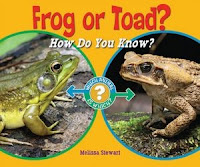
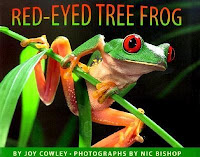
One of the best ways for you and your students to gain a solid understanding of the difference between narrative and expository writing styles is to read and compare the books Red-Eyed Tree Frog by Joy Cowley and Nic Bishop (narrative) and Frog or Toad? How Do You Know? by Melissa Stewart (expository). These books are short and simple, and they’re both about frogs.

As you read Red-Eyed Tree Frog, you can easily identify all the elements of a good story.

Pages 2-3 Author introduces setting (evening in the rain forest)
Pages 4-5 Author introduces main character (the red-eyed tree frog)
Pages 6-7 Author introduces main conflict (the frog is hungry)
Pages 8-9 Frog searches for food
Pages 10-11 Frog searches for food
Pages 12-13 Author introduces subconflict (a hunting boa constrictor)
Pages 14-15 Rising tension (snake moves toward frog)
Pages 16-17 Rising tension (snake spots frog)
Pages 18-19 Resolution of subconflict (frog jumps to safety)
Pages 20-21 Frog spots a moth
Pages 22-23 Resolution of main conflict (frog eats moth)
Pages 24-25 Falling action (frog climbs onto leaf)
Pages 26-27 Falling action (frog goes to sleep)
Pages 28-29 Satisfying circular ending (morning comes to rain forest)
Frog or Toad? How Do You Know?

Before you begin reading Frog or Toad? How Do You Know?, take a few minutes to preview this expository nonfiction book in search of text features. You will find a table of contents (page 2), glossary (page 3), list of references (22-23 pages), and index (page 24). As you page through the main text, you will notice headings, photos with labels, and boldfaced glossary terms.

As you read, you will see that the book is organized as follows:

Pages 4-5 Introduction
Pages 6-7 Compares skin of frog (verso) to the skin of the toad (recto)
Pages 8-9 Compares length of back legs of frog (verso) to length of back legs of toad (recto)
Pages 10-11 Compares body shape of frog (verso) to body shape of toad (recto)
Pages 12-13 Compares teeth of frog (verso) to teeth of toad (recto)
Pages 14-15 Compares song of frog (verso) to song of toad (recto)

At this point, stop reading for a moment and ask a question: What is the book’s text structure? Even elementary readers who have recently been introduced to text structures can easily answer this question. It’s Compare and Contrast. 

Now flip to the end of the main text and examine the colorful double-page infographic. It provides a fitting conclusion by summarizing all the frog vs. toad characteristics described throughout the book.

By reading these books aloud and discussing them, both adults and students can gain a solid understanding of the key differences between narrative nonfiction and expository nonfiction writing styles.

5 Kinds of Nonfiction

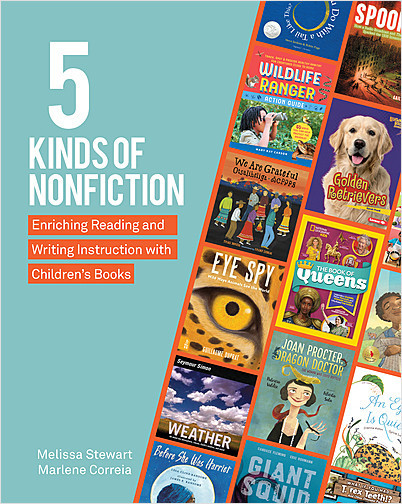
For more information about these two writing styles and the five major categories of nonfiction available today, see 5 Kinds of Nonfiction: Enriching Reading and Writing Instruction with Children’s Books. 

top 25 nonfiction blog award

Most Popular Posts

top 25 nonfiction blog award

Most Popular Posts