
Crafting Mega-fun Informational Writing: Endings
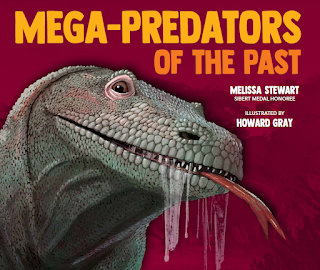
The conclusion of a nonfiction book—or any piece of informational writing—needs to leave readers satisfied. One great way to do this is by linking back to the beginning, as students are taught to do when writing a 5-paragraph essay. The final spread of Mega-Predators of the Past has two jobs. The text on the […]
Teaching Nonfiction Craft Moves
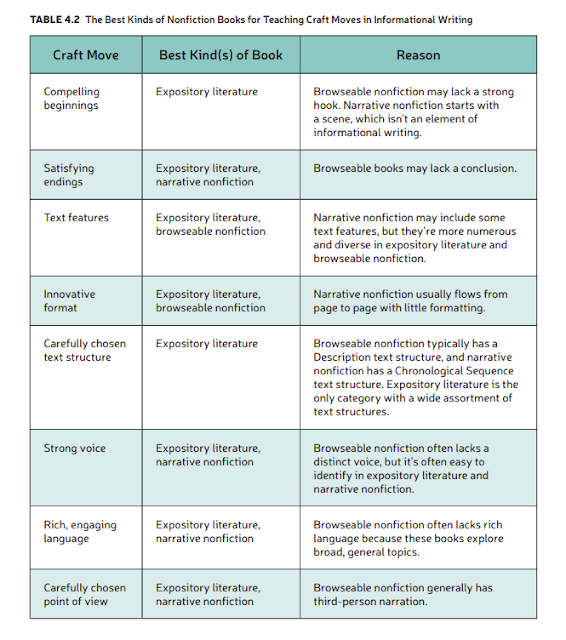
In most schools, students are plunging into their informational writing unit at this time of year, so I thought it might be helpful to share the table below, which appears on p. 54 of 5 Kinds of Nonfiction. While the book discusses each of these craft moves in detail—with half a chapter on text features and format, […]
Crafting Mega-fun Informational Writing: Beginnings
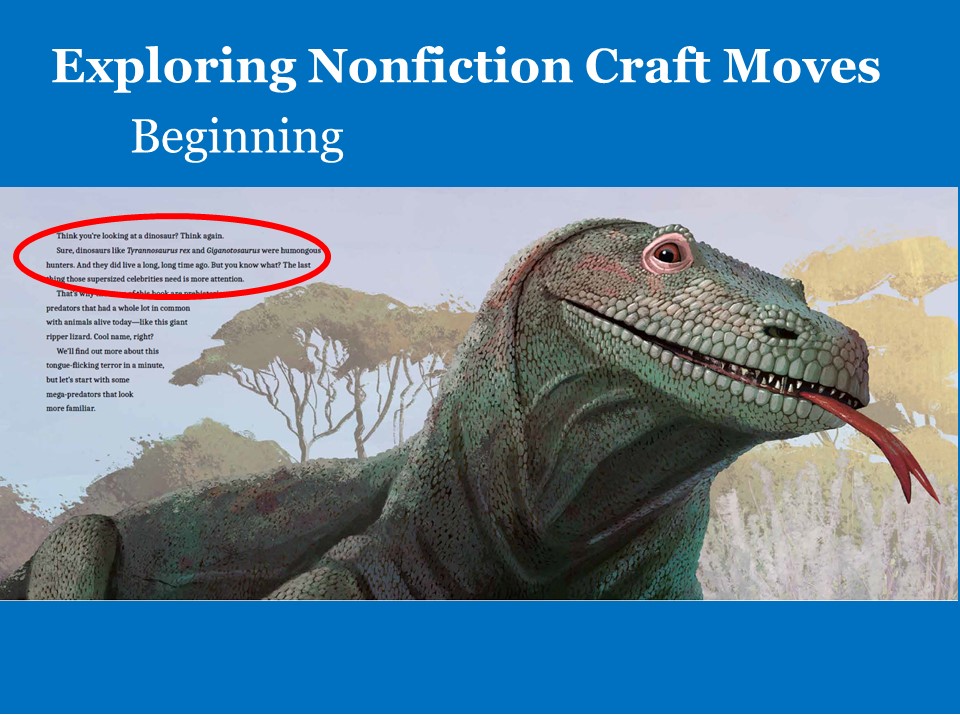
The beginning of a nonfiction book—or any piece of informational writing—has a lot of work to do. It has to grab the reader’s attention and convince them that reading the piece will be worth their time. It also has to let readers know what the book is all about. There are many different ways to accomplish […]
Crafting Mega-fun Informational Writing: Rich Language
Like many expository literature titles, Mega-Predators of the Past is a great mentor text for teaching students how to create informational text bursting with rich, engaging language. The book’s main text has many examples of strong verbs as well as language devices, such as alliteration and onomatopoeia. It also features questions and makes creative use of sentence fragments, […]
Crafting Mega-fun Informational Writing: Voice
Like many expository literature titles, Mega-Predators of the Past has a strong, distinct voice. What exactly is voice in nonfiction writing? According to highly-regarded literacy educator Ruth Culham, voice is the personality of the writing, it’s how the writing makes the reader feel. I like to think of nonfiction voice as spanning a continuum from lively […]
Crafting Mega-fun Informational Writing: Text Structure
Most narrative nonfiction books have a chronological sequence text structure and most traditional nonfiction and browsable nonfiction titles have a description text structure, but expository literature has a broad range of text structures. That’s one of the reasons they make great mentor texts for informational writing. Mega-Predators of the Past is a blended nonfiction book […]
Crafting Mega-fun Informational Writing: Text Features
As you can see in the sample below, most of the spreads in Mega-Predators of the Past present information in five different ways—main text, main illustration, a comparison box, a caption box, and a Mega Fact File. Why did I include so many text features? Because I had a lot of goals for the book, and […]
Crafting Mega-Fun Informational Writing: Choosing a Topic
Back in August 2016, as I was looking at the articles and notes pinned to the Idea Board in my office, I stumbled upon an article I’d torn out of Smithsonian Magazine in 2012. What was it about? Titanoboa—a fearsome 40-foot-long (Yikes!) snake that lived in the swamps of Colombia 60 million years ago. I’d been holding onto it for 4 […]
5 Kinds of Nonfiction and Student Purpose
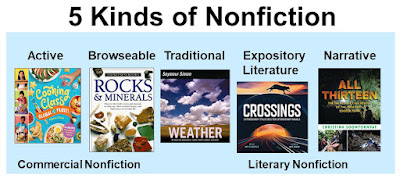
In writer’s workshop, students are often asked to think about “author purpose,” but today, I’d like us to consider student purpose when it comes to reading and writing and thinking and learning. One of the reasons Marlene Correia and I are so passionate about sharing the 5 Kinds of Nonfiction classification system with educators is because […]
It’s a Book!
Hip, hip hooray! After 11 years and who-knows-how-many drafts, I’m so excited to announce that Tree Hole Homes: Daytime Dens & Nighttime Nooks is entering the world today. It offers young reader a sneak peek into the secret lives of tree-dwelling critters from around the world. Click here and scroll down to watch a video that shares the […]