
Nonfiction Writing Mini-lessons
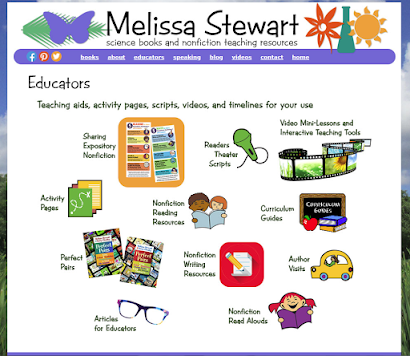
More and more, teachers are requesting educational resources that go beyond traditional teachers guides and activity sheets. So while I do still have those kinds of materials on my website, I’m also offering resources that delve deeply into the nonfiction reading and writing process from an author’s point of view. Some of these resources focus […]
Teaching Nonfiction Craft Moves
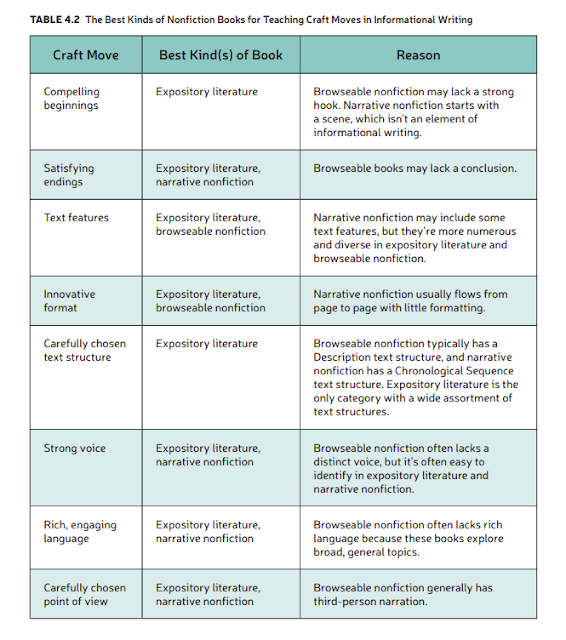
In most schools, students are plunging into their informational writing unit at this time of year, so I thought it might be helpful to share the table below, which appears on p. 54 of 5 Kinds of Nonfiction. While the book discusses each of these craft moves in detail—with half a chapter on text features and format, […]
Crafting Mega-fun Informational Writing: Rich Language
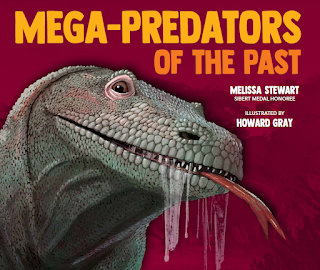
Like many expository literature titles, Mega-Predators of the Past is a great mentor text for teaching students how to create informational text bursting with rich, engaging language. The book’s main text has many examples of strong verbs as well as language devices, such as alliteration and onomatopoeia. It also features questions and makes creative use of sentence fragments, […]
Using the 5 Kinds of Nonfiction to Teach Craft Moves
In most schools, students are plunging into their informational writing unit at this time of year, so I thought it might be helpful to share the table below, which appears on p. 54 of 5 Kinds of Nonfiction. While the book discusses each of these craft moves in detail—with half a chapter on text features […]
How the 5 Kinds of Nonfiction Can Enrich Student Writing
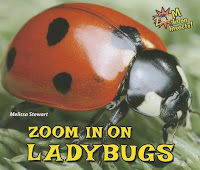
Imagine this scenario: A second grader named Kiyana has seen ladybugs in her yard and is excited to write a report about them. Since she doesn’t know much about these little insects, she begins her research process by reading Zoom in on Ladybugs by Melissa Stewart. This traditional nonfiction (all-about) book features information about where ladybugs […]
MSLA Handout: Innovative Activities for Teaching Nonfiction Reading and Writing
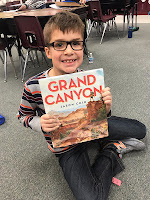
Author-educator Melissa Stewart shares fun, practical ideas for helping K-5 students develop information literacy skills as they read award-winning nonfiction books and produce their own informational writing. Attendees will go home with creative ways to support student learning in the library and via collaboration with classroom teachers. READING Nonfiction Smackdown! Upper elementary students read two […]
Nonfiction Pre-writing: An Authentic Example
A few weeks ago,I wrote a blog post called Why Kids Copy their Research Sources, and How to Break the Habit and was blown away by the response. So many teachers told me it was incredibly helpful. I also received some great comments from fellow children’s book writers. Award-winning science poet Leslie Bulion had this […]
The Science-Literacy-Connection
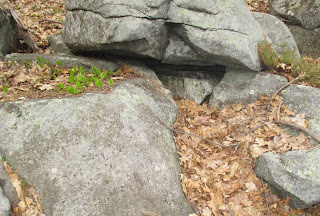
If I were a fisher, I’d sleep in this fissure. This fun sentence came to me as I was photographing this enticing crevice, and then I thought what a great homophone lesson! Homophones are two (or more) words that sound the same, but are spelled differently and have different meanings. Small groups of fourth or fifth graders […]
Behind the Books: Just the Right Word, Part 5
As far as I’m concerned, there’s one more important instance where choosing the right words can make all the difference. Sensory details can really bring a piece of prose to life. Why is appealing to the senses so powerful? Because they are how we experience and interpret the real, 3-D word we encounter every day. […]
Behind the Books: Just the Right Word, Part 4
Meaningful comparisons enrich text by associating something that is unfamiliar with something that they know well. Similies and metaphors are powerful because they can help a reader envision a place or understand a challenging concept with ease. Here’s an example from my book The Eyes Have It! The Secrets of Eyes and Seeing. Imagine being […]