
Deadliest Animals: Look at Those Cool Photos!
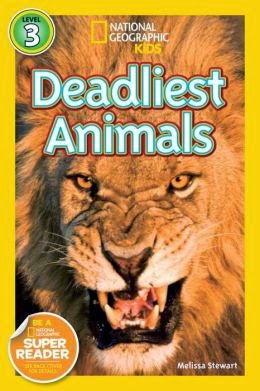
When I gush over the amazing images in Deadliest Animals and other National Geographic Readers, I’m not being at all immodest. That’s because I have very little to do with tracking down the photos or deciding how to use them in the book. Sure, I make suggestions based on my research, but lots of other […]
Deadliest Animals: Working with an Editor
When I’m happy with a manuscript, it’s time to send it in to my editor for her feedback. Believe it or not, I almost never meet my editors in person and I rarely speak to them on the phone. Almost all of our communication is via email. Most of the time, my editor and […]
Deadliest Animals: Revision
Ah, revision. Kids hate it. And honestly, I don’t blame them. The truth is that I’m not crazy about it either, but I’ve been through it enough times that I KNOW it will be worth it. I KNOW it will make the manuscript better. But kids don’t have the same confidence in the process. Why […]
Deadliest Animals: Text Features
Text features are a key component of the National Geographic Readers. They help to break up the main text and keep the pages vibrant and visually dynamic. Level 3 readers include: –a table of contents –seven jokes –five Weird But True facts –a couple of repeating sidebars –a 10 Cool Things spread –eleven glossary terms […]
Deadliest Animals: Building a Book, Part 2
In The Art of Information Writing, Colleen Cruz and Lucy Calkins say: “The challenge when teaching information writing is to teach children to generate ideas, align them with facts, and weave both facts and ideas together into a text.” Instead of the metaphor of weaving, I like to compare nonfiction writing to the process of […]
Deadliest Animals: Building a Book, Part 1
In The Art of Information Writing, the lesson on beginnings comes in the middle of the book. Colleen Cruz and Lucy Calkins suggest that writers not worry about their beginning at the start of the writing process. They recommend that writers just dive in to whichever TOC section they feel most confident or excited about. […]
Deadliest Animals: Ugh! Outlines
Here’s something that might surprise you. I hate making outlines, and I don’t do it unless I have to (because the publisher requires it). I think it must go back to the way I learned to write in school. Outlines were supposed to be like roadmaps, and you followed them carefully, so you wouldn’t get […]
Deadliest Animals: A Look at Structure
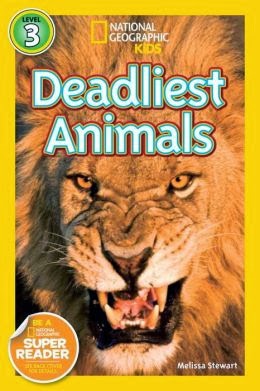
Here are some great quotations from The Art of Information Writing: “Writers often make plans for how to organize their information writing. Writers make one plan, then they think about different possible plans, and they keep doing this over and over.” “So much of what makes a writer strong . . . is the ability […]
Deadliest Animals: Chunk and Check
As I’m researching, I type notes into a Microsoft Word file, always using my own words to avoid any possibility of accidental plagiarism (as I recently discussed here). By the time I’m done, I might have 20, 30, 40 pages of notes. I save that file, which includes bibliographic references, as is. Then I make […]
Deadliest Animals: Research
I wrote about my general research process just a few weeks ago, here and here, so I’d encourage you to look at those posts and share them with your students. Although I’ve observed many of the creatures in Deadliest Animals while on safari in Africa or exploring the tropical rain forests of Costa Rica, I […]