
Writing Expository Nonfiction that Sings, Part 5
For the last few Mondays, I’ve been posting about the importance of understanding the key elements of finely-crafted expository nonfiction and helping students identify those features as they read and include them as they write. First, I discussed how starting with a question can help writers come up with a focused topic, which allows for […]
The Power of a Book
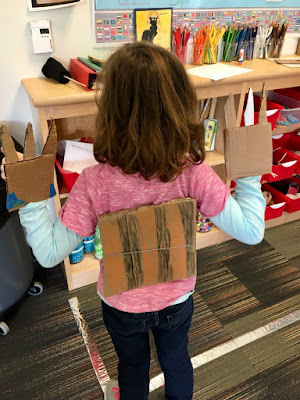
Photos like this one warm my heart. They’re potent reminders of why I write for kids. When this girl read my book Pipsqueaks, Slowpokes, and Stinkers: Celebrating Animal Underdogs, she was fascinated by the Galápagos tortoise. She couldn’t believe that it took this giant turtle almost 6 hours to travel one mile—a distance she could […]
Q & A with Sara Levine: Writing Flower Talk: How Plants Use Color to Communicate
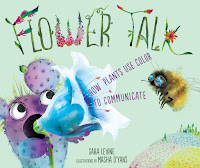
In this fascinating interview, award-winning author Sara Levine shares some of the surprising strategies she used in crafting her new picture book about how plants send messages to animals. MS: Your previous books have focused on the comparative anatomy of bones and teeth. Why did you decide to write about plants? SL: The idea Flower […]
Presenting Nonfiction: The Power of Student Choice by Amanda Schreiber
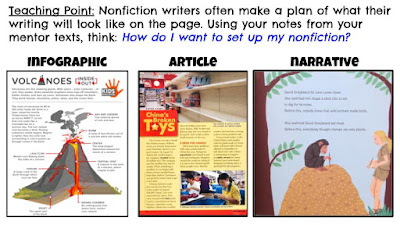
Confession time. Nonfiction writing has been one of my biggest struggles as a fifth grade teacher. My students love reading true texts, but when it comes to the writing, they struggle to carry over all the wonderful craft moves we’ve learned from fiction writing. Even though I allow them to choose a topic and […]
nErDcampMI Handout: 5 Kinds of Nonfiction: Rethinking Your Book Collection
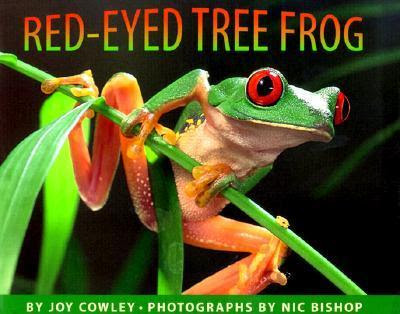
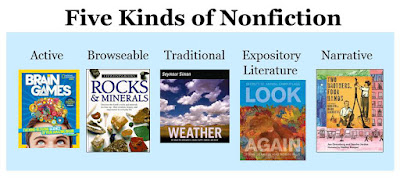
Most children’s literature enthusiasts are naturally drawn to stories and storytelling, including fiction and narrative nonfiction But up to 42 percent of elementary students prefer expository nonfiction. This session breaks down the five categories of nonfiction children’s books and provides tips for re-balancing school and classroom libraries and integrating expository nonfiction into lesson plans. Background […]
Narrative vs. Expository: Writing Nonfiction Picture Books
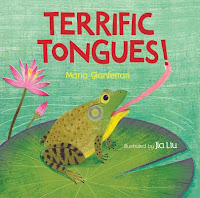
I’m excited to host award-winning author Maria Gianferrari today. Thanks, Maria, for describing your creative process. I love nonfiction, both reading it and writing it, so I’m delighted and honored to be guest posting today on Celebrate Science since it’s my favorite nonfiction blog. I have a deep love of the natural world and the […]
Behind the Books: Writing STEM Picture Books, Part 6
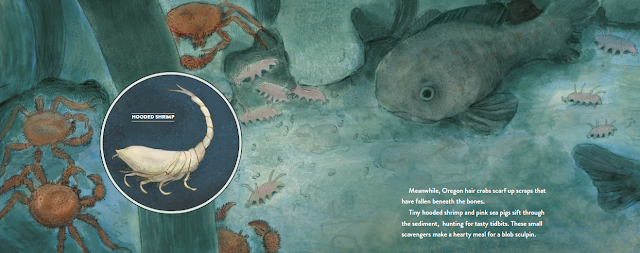
Since the beginning of the year, I’ve been discussing the ins and outs of writing STEM picture books, including its key craft elements. (Scroll down to read earlier posts in this discussion.) Today I’m going to focus on text structure. Common Core espouses six major text structures. But in truth there are many more. Nearly […]
Behind the Books: Writing STEM Picture Books, Part 5
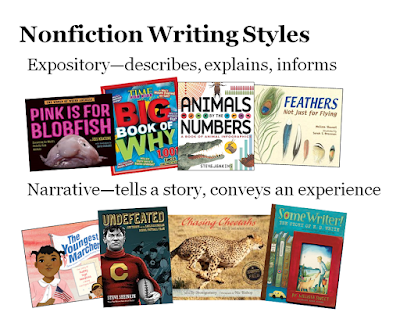
For the last month, I’ve been discussing the ins and outs of writing STEM picture books, including its key craft elements. (Scroll down to read earlier posts in this discussion.) Today I’m going to talk about writing style. There are two nonfiction writing styles—narrative or expository. Here are some examples: Life stories generally have a […]
In the Classroom: Elements of a Nonfiction Booktalk
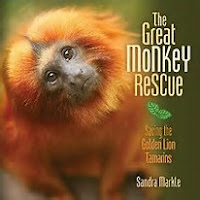
Not long ago, I saw this list of recommended components for a booktalk: Title Author Genre Main character Plot bit And boy, did it frost my britches. Why? Because the person who created this list assumed the booktalker was talking about a fiction title. What about nonfiction? It’s important to booktalk these titles too because many kids […]
My Favorite Social Studies Book of 2016
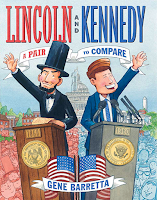
Oh how I wish I had read Lincoln and Kennedy: A Pair to Compare by Gene Barretta before I published my Mock Sibert list in early December. But for some reason, I didn’t discover this book until my Christmas reading binge. Still, it’s easily my favorite social studies book of the year. Why? Let’s digress a bit. […]