
Language Matters: How We Talk about Nonfiction
Recently, I read an article that contained this sentence: “While writing nonfiction, I use every single fiction technique a novelist uses.” The author then provides a series of examples of how she includes characters, scenes, conflict, rich language, voice, etc. in her writing. Sounds good, right? Not to me. While I applaud authors who draw […]
What Is Voice?
For years, I’ve been trying to gain a deeper understanding of voice and reconcile how it applies to fiction vs. nonfiction writing. What’s the connection? At every writer’s conference I’ve ever attended, editors say they’re looking for fiction manuscripts with a unique, distinct voice. Whenever attendees ask exactly what they mean by “voice”, editors shrug […]
nErDcampMI Handout: 5 Kinds of Nonfiction: Rethinking Your Book Collection
Most children’s literature enthusiasts are naturally drawn to stories and storytelling, including fiction and narrative nonfiction But up to 42 percent of elementary students prefer expository nonfiction. This session breaks down the five categories of nonfiction children’s books and provides tips for re-balancing school and classroom libraries and integrating expository nonfiction into lesson plans. Background […]
Narrative vs. Expository: Writing Nonfiction Picture Books
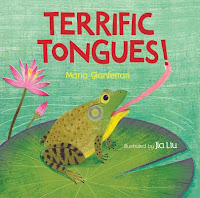
I’m excited to host award-winning author Maria Gianferrari today. Thanks, Maria, for describing your creative process. I love nonfiction, both reading it and writing it, so I’m delighted and honored to be guest posting today on Celebrate Science since it’s my favorite nonfiction blog. I have a deep love of the natural world and the […]
MSLA Handout: Innovative Activities for Teaching Nonfiction Reading and Writing
Author-educator Melissa Stewart shares fun, practical ideas for helping K-5 students develop information literacy skills as they read award-winning nonfiction books and produce their own informational writing. Attendees will go home with creative ways to support student learning in the library and via collaboration with classroom teachers. READING Nonfiction Smackdown! Upper elementary students read two […]
Behind the Books: Writing STEM Picture Books, Part 8
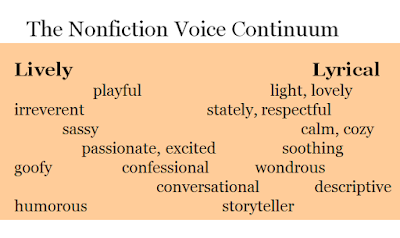
Since the beginning of the year, I’ve been discussing the ins and outs of writing STEM picture books, including its key craft elements. (Scroll down to read earlier posts in this discussion.) Today I’m going to focus on nonfiction voice. What exactly is nonfiction voice? It’s the personality of the writing. It’s how the writing […]
In the Classroom: Elements of a Nonfiction Booktalk
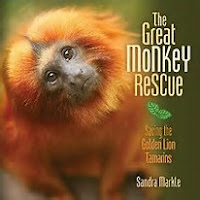
Not long ago, I saw this list of recommended components for a booktalk: Title Author Genre Main character Plot bit And boy, did it frost my britches. Why? Because the person who created this list assumed the booktalker was talking about a fiction title. What about nonfiction? It’s important to booktalk these titles too because many kids […]
RI TeacherFest Handout: Helping Students Overcome Their Biggest Nonficiton Writing Roadblocks
Today Sarah Albee and I are leading a 90-minute session at the Rhode Island Teacherfest. We will begin by asking the educators in the audience to share the most common nonfiction writing challenges their students face, and then we will suggest solutions. We will also invite audience members to share their own creative ideas with […]
SCBWI Handout: Writing STEM Picture Books

3 Tips to Get Started Starting with a Question https://twowritingteachers.org/2017/05/26/stewartnfques/ Making a Personal Connection http://celebratescience.blogspot.com/2017/05/behind-books-concept-and-connection.html Hooking Your Readers http://celebratescience.blogspot.com/2013/11/behind-books-hooking-young-readers.html http://celebratescience.blogspot.com/2015/03/behind-books-tinkering-with-my-tools.html 6 Key Elements of Nonfiction Writing Category http://celebratescience.blogspot.com/2015/10/behind-books-look-at-life-stories.html http://celebratescience.blogspot.com/2015/10/behind-books-look-at-survey-books.html http://celebratescience.blogspot.com/2015/10/behind-books-look-at-specialized.html http://celebratescience.blogspot.com/2015/10/behind-books-look-at-concept-books.html http://celebratescience.blogspot.com/2015/11/behind-books-choosing-nonfiction.html http://cynthialeitichsmith.blogspot.com/2017/05/guest-post-melissa-stewart-on-concept.html http://celebratescience.blogspot.com/2016/01/behind-books-writing-sciencenature.html Writing Style http://celebratescience.blogspot.com/2015/12/behind-books-two-kinds-of-expository.html http://celebratescience.blogspot.com/2015/12/behind-books-two-kinds-of-narrative.html http://celebratescience.blogspot.com/2016/10/breaking-mold.html http://celebratescience.blogspot.com/2016/08/mta-handout-nonfiction-triumvirate.html Text Structure http://celebratescience.blogspot.com/2017/01/behind-books-shopping-for-text-structure.html http://celebratescience.blogspot.com/2016/06/behind-books-q-the-forgotten-text.html http://celebratescience.blogspot.com/2016/01/behind-books-text-structure.html http://www.melissa-stewart.com/pdf/Understanding_Text-Structures.pdf#zoom=70 http://celebratescience.blogspot.com/2014/03/deadliest-animals-look-at-structure.html Format http://celebratescience.blogspot.com/2017/03/in-classroom-text-format-in-expository.html http://celebratescience.blogspot.com/2017/03/behind-books-importance-of-format-in.html http://celebratescience.blogspot.com/2011/05/behind-books-does-your-books-format.html Voice […]
Nonfiction Joy: Passion and Process
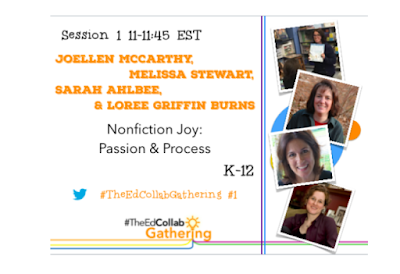
Thanks to rock star educator JoEllen McCarthy (@JoEllenMcCarthy), I had an opportunity to chat about nonfiction writing with uber-talented authors Sarah Albee and Loree Griffin Burns last Saturday as part of the Educator Collaborative‘s Spring Gathering (#TheEdCollabGathering). If you didn’t get a chance to catch our program live, I have great news. It was archived here, […]