
Narrative & Expository: Two Nonfiction Writing Styles
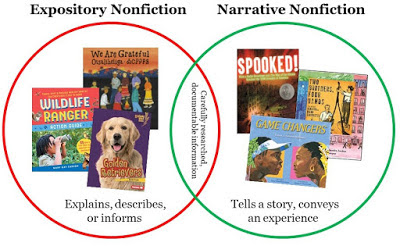
If you’re like most educators, you’ve probably heard the terms narrative nonfiction and expository nonfiction, but you might not be completely clear about the differences between these two writing styles. Let’s start with what narrative nonfiction and expository nonfiction have in common. They’re both meticulously researched, and every single fact and idea the author includes […]
Has Nonfiction Reached a Tipping Point?
While nonfiction and fiction have always received equal respect and recognition in the adult publishing world, the same hasn’t been true for children’s literature. During the 29 years I’ve worked in children’s publishing, first as an editor and now as a writer, nonfiction has been the underdog of the industry. Book reviewers and award committees […]
AASL Handout: 5 Kinds of Nonfiction
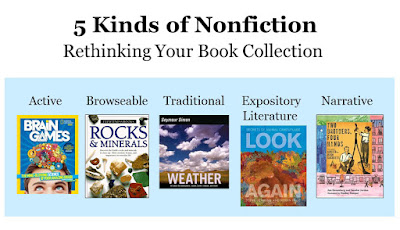
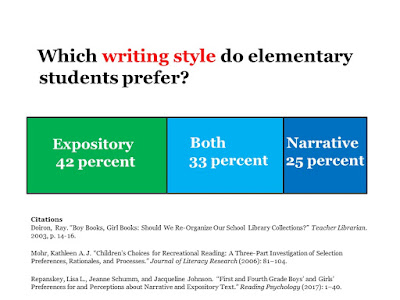
Many school librarians have worked hard to add award-winning narrative nonfiction to their collections, but studies show that 42 percent of elementary students prefer expository nonfiction. This session breaks down the five categories of nonfiction children’s books (four of which have an expository writing style), offers tips for updating book collections, and provides strategies for […]
What’s a Pseudo-narrative?
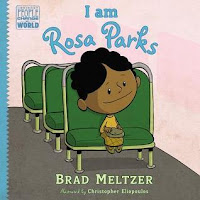
In fiction, first-person narration is powerful because it allows readers to see the world from the main character’s perspective. In recent years, some authors have tried to bring this same kind of intimacy and engagement to our understanding of historic figures by writing biographies in first person. In books like I Am Rosa Parks by […]
We Need Diverse Nonfiction
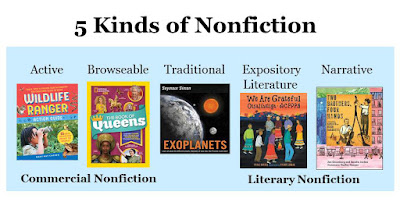
In December 2017, I proposed a system for classifying children’s nonfiction that many writers and educators seem to find useful.* The 5 Kinds of Nonfiction divides the wide world of nonfiction into 5 distinct categories—active, browseable, traditional, expository literature, and narrative. Here are the main characteristics of each category: Click to enlarge At nErDcampMI in […]
21st Century Nonfiction Conference: Breaking the Boundaries
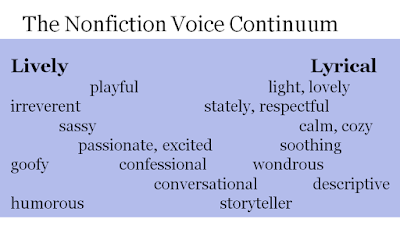
From outrageous illustrations to engaging voices, the confining walls of humdrum nonfiction are being chipped away by one boundary-pushing book after another. In this session, Heather L Montgomery and Melissa Stewart examine where children’s nonfiction can go in the future. You will practice outside-of-the-box thinking, try an exercise to see where voice can take you, […]
Behind the Books: More Novelty in Nonfiction Design
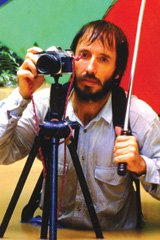
Today we’re going to look at some more examples of how the art and design in nonfiction children’s books have changed over time. Let’s look at some stunning styles developed by some very creative people. Here are some recent books in which the topic and art really dictate the format and design: Most wildlife photographers […]
Behind the Books: Novelty in Nonfiction Design
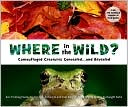
Okay, as promised last week, here are some examples of nonfiction books that make wonderful, innovative use of format and design: Where in the Wild? Camouflaged Creatures Concealed . . and Revealed by David Schwartz, Yael Schy, and Dwight Kuhn teaches observation skills, but that’s not what kids will notice. To them, the book is […]
Behind the Books: Trends in Nonfiction Design
The design of nonfiction books has changed a lot in the last couple of decades. Of course, fiction design has changed too, but not quite as dramatically (with the notable exception of graphic novels). When I entered the publishing industry in the early 1990s, books were pasted up. What does that mean? Exactly what it […]