
Book of the Week: Frog or Toad? How Do You Know?
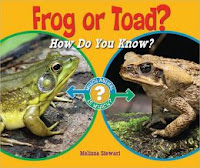
Educators often ask me which of my books would work best in their classroom. So this year, I’ve decided to feature a book each week and highlight related teaching materials and strategies. Last week, I discussed A Place for Frogs. If you pair it with Frog or Toad? How Do You Know?, you can create […]
Behind the Books: Even More About Nonfiction Structure

Okay, I admit it. I’m obsessed with structure in nonfiction writing. I could talk about it all night and all day. And sometimes I do. The more I discuss the topic with people like Alyson Beecher, Cathy Potter, Carrie Gelson, Mary Ann Scheuer, Loree Burns, Deb Heiligman, and Sarah Albee, the more I learn and […]
Behind the Books: More about Mentor Texts
A few days ago, as I was proofreading a report my husband had written for work, I looked past all the technical jargon and started to think about how it was structured. (What can I say. I’m obsessed with structure.) Like many expository nonfiction book for kids, it had lots of subheads. It also had […]
Behind the Books: Thinking About Nonfiction Structure, Part 2
Before the holiday break, I began to discuss some of the challenges of trying to categorize nonfiction children’s books using the six structures espoused by CCSS—description, sequence/order, compare & contrast, question & answer, cause & effect, and problem & solution. I focused on the sequence structure, which is richly represented in children’s literature. This week […]
Behind the Books: Thinking About Nonfiction Structure, Part 1
I’ve blogged about structure many times. About 5 years ago, I tried to come up with my own categories. I was constantly revising my ideas. Then Common Core came along and presented educators with six distinct groupings—description, sequence/order, compare & contrast, question & answer, cause & effect, and problem & solution. I’ve tried again and […]
Behind the Books: Thinking about Nonfiction Classification
Update June 24, 2024: My thinking about nonfiction classification has evolved considerably since I wrote this post, but I’ve decided not to delete it because there’s value in looking back at my past ideas. For my current thinking, please see the book 5 Kinds of Nonfiction as well as information on my website. Last week, I blogged about […]
Deadliest Animals: A Look at Structure
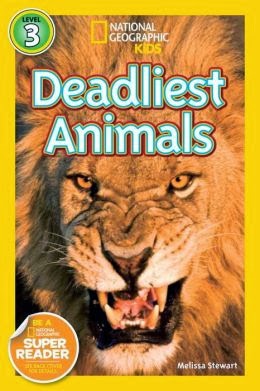
Here are some great quotations from The Art of Information Writing: “Writers often make plans for how to organize their information writing. Writers make one plan, then they think about different possible plans, and they keep doing this over and over.” “So much of what makes a writer strong . . . is the ability […]
Behind the Books: Even More on Text Structure
Last week, when I wrote about circle stories, I included my own book, No Monkeys, No Chocolate, in my list of sample titles. Believe it or not, the idea that the book featured a circular structure was a revelation. Honestly, it never occurred to me until a Kirkus reviewer called it a “clever circle story” […]
Behind the Books: More on Text Structure
I’ve been thinking a lot about nonfiction text structures lately. I spoke about it at the New England Reading Association conference in Portland, Maine, in September, and I’ll be part of a panel discussing this topic at NCTE in Boston in November. As I mentioned a couple of weeks ago, CCSS directly mentions four different […]
Behind the Books: Thinking About Text Structure
A few weeks ago, I wrote a post about “gamification” as a nonfiction text structure and included this visual of text structures specifically mentioned in the Common Core ELA standards. Grade 4 Grade 5 Describe the overall structure (chronology, comparison, cause/effect, problem/solution) of events, ideas, concepts, or info in a text or part of a […]