
A Deep Dive into Nonfiction by Kim Haines
After reading school librarian Meredith Inkeles’s blog post about students writing book reviews for nonfiction books, fourth grade teacher Kim Haines was inspired to combine that lesson with a variety of other activities that I’ve share on this blog, on my website, and in 5 Kinds of Nonfiction: Enriching Reading and Writing Instruction with Children’s Books […]
Using Nonfiction Writers Dig Deep to Explore Elementary Students as Nonfiction Readers and Writers by Tom Bober
Last March, uber-talented school librarian Tom Bober shared this terrific lesson idea for exploring active nonfiction with students. Now he’s back to describe his school’s experience incorporating the teaching strategies and author essays from Nonfiction Writers Dig Deep: 50 Award-winning Children’s Book Authors Share the Secret of Engaging Writing into nonfiction reading and writing instruction across […]
Using the 5 Kinds of Nonfiction to Teach Craft Moves
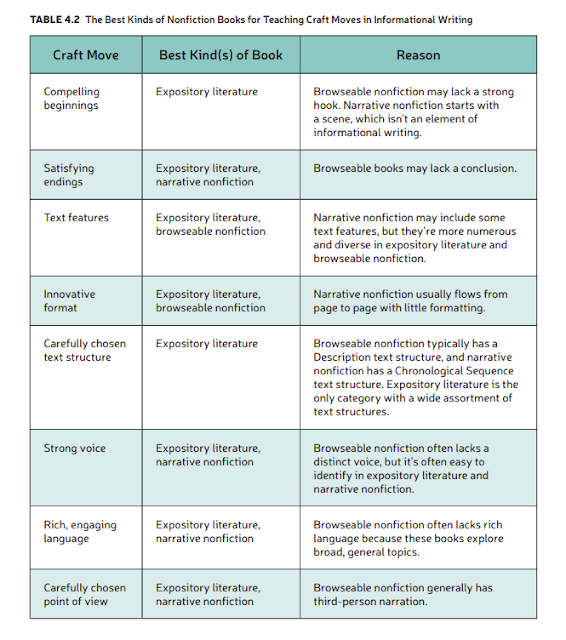
In most schools, students are plunging into their informational writing unit at this time of year, so I thought it might be helpful to share the table below, which appears on p. 54 of 5 Kinds of Nonfiction. While the book discusses each of these craft moves in detail—with half a chapter on text features […]
Why I Write Expository Nonfiction by Roxie Munro
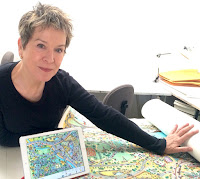
Today we continue the series in which award-winning nonfiction authors compare the joys and challenges of writing narrative nonfiction and expository nonfiction with an essay by Roxie Munro. Thank you, Roxie. I find the expository writing style perfect for the kinds of nonfiction books I write. It allows me to impart a lot of information in […]
The Benefits of a Visual-Tactile Writing Process
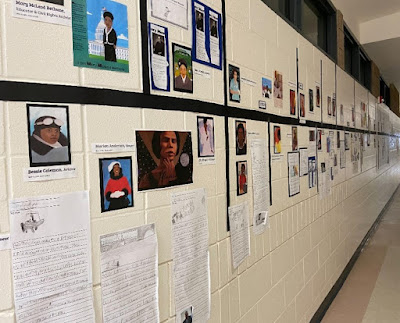
Not long ago, I spotted these two side-by-side images in a tweet from award-winning nonfiction author Steve Sheinkin. He was celebrating the completion of a book by showing that he had taken down his visual-tactile outline, and his magnetic white board was ready for him to begin work on a new title. Look at all those […]
Resources for Educators: Text Structures
More and more, teachers are requesting educational resources that go beyond traditional teachers guides and activity sheets. So while I do still have those kinds of materials on my website, I’m also offering resources that delve deeply into the nonfiction reading and writing process from an author’s point of view. Some of these resources focus […]
Welcome to the 2020-2021 School Year
Social media. Some people love it. Some people hate it. And some people have mixed feelings. Sure, it can be a time suck, but it’s also a powerful tool for sharing ideas. I’ve learned so much from blog posts written by educators, Twitter conversations with teachers and librarians, and discussions within Facebook groups focused on […]
Classifying Science Books for Kids

Recently, I had a chance to read “The Durable, Dynamic Nature of Genre and Science: A Purpose-Driven Typology of Science Trade Books” by Professor Laura May and five of her Georgia State University colleagues. The article appeared in the September 2019 issue of Reading Research Quarterly, which is published by the International Literacy Association. I’ll […]
What’s “In Media Res”?
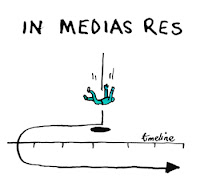
In eighth grade, I had an English teacher named Mr. Biggs. We met during fifth period—right after lunch—every day. Mr. Biggs loved to share “cocktail information”—random tidbits of information that might one day come in handy as we tried to make small talk at a cocktail party. What I remember most is the enthusiasm with […]
Thinking About the 5-Paragraph Essay
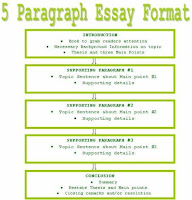
Lately, the 5-paragraph essay has been getting a bad rap. After all, there’s really nothing wrong with an essay composed of an introduction, a conclusion, and three paragraphs that explain and/or support a main point sandwiched in between. In fact, it can be an effective way to structure a piece of nonfiction writing. But it’s […]