
Behind the Books: A Place for Bats in the Classroom
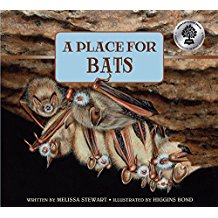
I’m so excited that a new, updated edition of A Place for Bats became available on April 1. As with the original version, there are all kinds of ways you can use it in the classroom. For starters, there’s a Teacher’s Guide that makes connections to a wide variety of Next Generation Science Standards and […]
A Picture Is Worth a Thousand Words
Just imagine how many words it would take to explain everything we see in this solar system diagram: –the names of the planets, –the sizes of the planets,–the colors of the planets,–the distance each planet is from the sun, –the distance each planet is from the other planets. It’s amazing that just one quick glance […]
Text Feature posters!
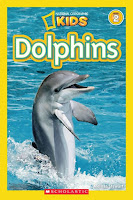
This week I visited Kennedy School in Billerica, MA. Once again, I was blown away by how much fun the students were having with nonfiction writing. For one fourth grade project, students read my book Dolphins and used the book’s text features as inspiration for creating their own text feature posters with information about an […]
Writing Informational Texts in K-2
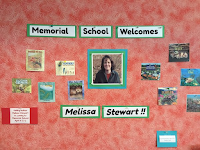
Recently, a lot of early elementary teachers have been asking me for writing ideas for their students. Since a major goal for K-2 is learning to recognize text features, I wanted to share a great project developed by Mrs. Teany (@room12owls), a fabulous K teacher at Memorial School (@MemLibrary) in Medfield, MA. First, Mrs. Teany’s students […]
Book of the Week: A Place for Butterflies
Educators often ask me which of my books would work best in their classroom. So this year, I’ve decided to feature a book each week and highlight related teaching materials and strategies. A Place for Butterflies was originally published in 2006, but was revised and updated in 2014 and 2024, so it has the latest […]
Book of the Week: A Place for Bats
Educators often ask me which of my books would work best in their classroom. So this year, I’ve decided to feature a book each week and highlight related teaching materials and strategies. You could share one or two spreads of A Place for Bats to support NGSS PE K-ESS3-3 or read the whole book as […]
Deadliest Animals: Text Features
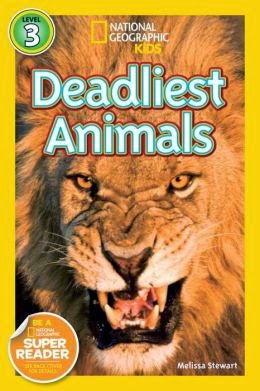
Text features are a key component of the National Geographic Readers. They help to break up the main text and keep the pages vibrant and visually dynamic. Level 3 readers include: –a table of contents –seven jokes –five Weird But True facts –a couple of repeating sidebars –a 10 Cool Things spread –eleven glossary terms […]
Having Fun with Common Core: Nonfiction Narratives and Reading Buddies
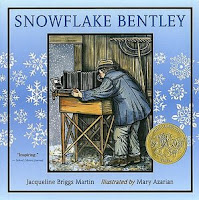
If you’ve been reading this blog strand since September, you should now be getting a sense of how pairing Reading Buddies with nonfiction books that feature layered text can strengthen reading skills, introduce and reinforce age-appropriate science concepts, and promote cooperation and camaraderie. And by discussing the text as they go, students get plenty of […]
Behind the Books: Three Melissas and Nonfiction Text Features
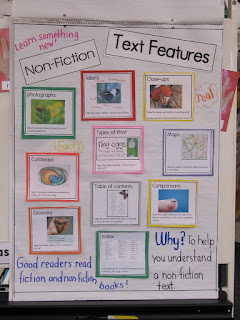
Last week during a Twitter conversation, @mtechman a.k.a. Melissa Techman, the K-5 School Librarian in Charlottesville, VA, mentioned that the Common Core ELA standards have left teachers searching for effective ways to teach nonfiction text features. She pointed me to this great blog written by Melissa Clancy, a kindergarten teacher at Bates Elementary School in […]