
Rainforest Read Alouds + Combining Science with ELA
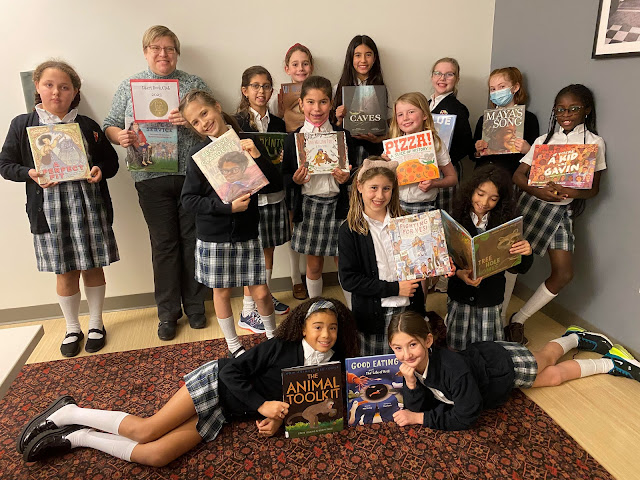
Many elementary classrooms do a unit about rain forests, and it’s a wonderful way to combine science and language arts. Here are five fantastic read alouds that look at the topic through a variety of lenses—fiction, nonfiction, and informational fiction; expository and narrative; biography and cumulative text. There’s something to engage every child. The Leaf […]
Why I Write Narrative Nonfiction by Deborah Hopkinson
Today we continue the series in which award-winning nonfiction authors discuss the joys and challenges of writing narrative nonfiction and expository nonfiction with an essay by Deborah Hopkinson. Thank you, Deborah. As soon as I read about it, I knew young readers would be riveted. The year: 1347. The scene: a stone fort on the Black […]
Why I Write Expository Nonfiction
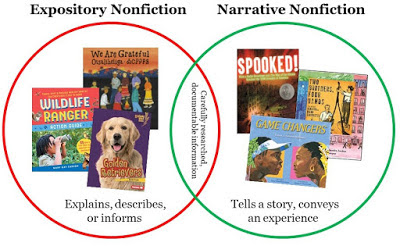
If you’re like most educators, you’ve probably heard the terms narrative nonfiction and expository nonfiction, but you might not be completely clear about the difference between these two writing styles. Both are meticulously researched and fully faithful to the facts, but they present ideas and information differently. Narrative nonfiction tells a story or conveys an experience, […]
Narrative Nonfiction Is 100% Verifiable
During a recent discussion on social media, I realized that some educators seem to be confused about the meaning of the term “narrative nonfiction.” First and foremost, narrative nonfiction is meticulously researched and every single fact and idea is true. In other words, the information presented in the text is 100 percent verifiable. Period. The […]
Re-Thinking the Transactional Theory of Reading
According to Louise Rosenblatt’s highly-regarded Transactional Theory of Reading, there are two different stances (or approaches) to reading—aesthetic and efferent. The difference between the two approaches lies in where the reader’s attention is while reading. Rosenblatt’s theory states that when readers adopt an aesthetic stance, they read for enjoyment and focus on how they’re experiencing the […]
Resources for Educators: Narrative vs. Expository Writing Styles
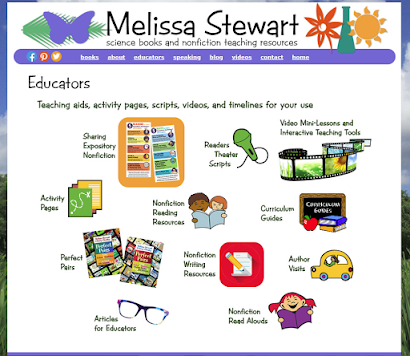
More and more, teachers are requesting educational resources that go beyond traditional teachers guides and activity sheets. So while I do still have those kinds of materials on my website, I’m also offering resources that delve deeply into the nonfiction reading and writing process from an author’s point of view. Some of these resources focus […]
Resources for Educators: What’s Blended Nonfiction?
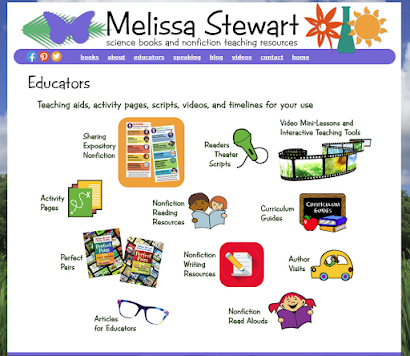
More and more, teachers are requesting educational resources that go beyond traditional teachers guides and activity sheets. So while I do still have those kinds of materials on my website, I’m also offering resources that delve deeply into the nonfiction reading and writing process from an author’s point of view. Some of these resources focus […]
It’s Time for the Sibert Smackdown!
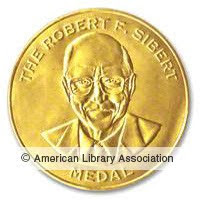
The Sibert Smackdown is an activity intended to build enthusiasm for the Robert F. Sibert Informational Book Medal, which is given each year as part of the American Library Association’s annual Youth Media Awards. It focuses on picture books because they are more manageable to read in a school setting. Here’s how it works. Students in grades 3-8 read the […]
Resources for Educators: Narrative Nonfiction & Expository Nonfiction
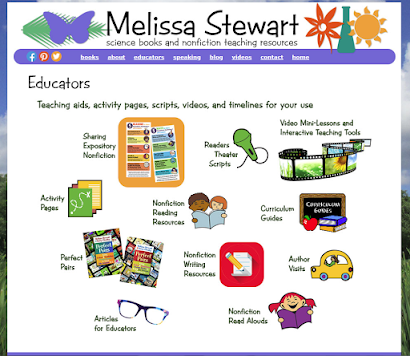
More and more, teachers are requesting educational resources that go beyond traditional teachers guides and activity sheets. So while I do still have those kinds of materials on my website, I’m also offering resources that delve deeply into the nonfiction reading and writing process from an author’s point of view. Some of these resources focus […]
We Still Need Diverse Nonfiction
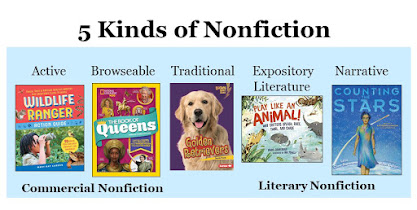
Last fall, I wrote a post entitled “We Need Diverse Nonfiction” to highlight the unfortunate lack of nonfiction, especially the four categories of nonfiction with an expository writing style (active, browseable, traditional, expository literature), by BIPOC. Since then, I’ve continued to keep track of BIPOC authors everyone should be aware of. Here are some authors you may […]