
Text Scaffolding in Student Nonfiction Writing
Marlene Correia and I included a section about how text scaffolding can help young readers in Chapter 5 of 5 Kind of Nonfiction: Enriching Reading and Writing Instruction with Children’s Books. But last summer, I had a conversation with literacy educator Xenia Hadjioannou that has led me to think more deeply about it in terms of […]
How Young Writers Can Avoid Plagiarism, Part 2
On Tuesday, I shared a video in which I discuss how two personal experiences helped me develop the lens of gratitude that makes my new book Thank You, Moon: Celebrating Nature’s Nightlight so much more than just a matter-of-fact book about how moonlight affects animals. I hope you’ll take a few minutes to view it and […]
Thank You, Moon: Choosing a Text Structure
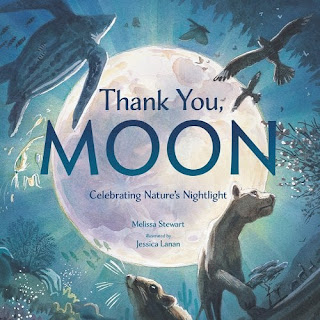
Last week, I described how I decided to look at the role of the Moon in animals’ lives through the lens of gratitude. That was an important first step in creating Thank You, Moon, but I still needed a text structure, and that’s often the biggest challenge for me. Nearly all narrative nonfiction has a sequence […]
Thank You, Moon: Finding a Hook
Today is the official release date for Thank You, Moon: Celebrating Nature’s Night Light, and I couldn’t be more excited. The story behind this book traces back to February 2020. Editor Katherine Harrison tagged me on Twitter, alerting me to a conversation about how animals respond to the Moon’s cycle, and asked “Is this something you’d potentially be […]
A Mega-fun Mentor Text for Opinion Writing
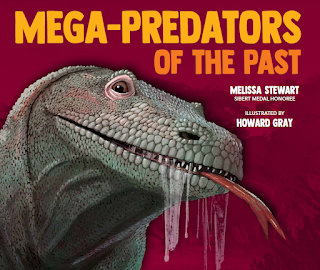
In most states, the ELA standards expect students to create opinion pieces, or persuasive writing. A quick google search can provide lists of fictional mentor texts, but since the pieces students create will be nonfiction, wouldn’t an informational book make a better mentor? Your school’s librarian or literacy coach can probably create a list of persuasive nonfiction […]
Making Test Prep Fun and Meaningful
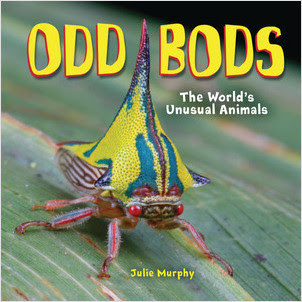
Nobody likes state-mandated tests, but they’re an unavoidable part of school life, and that means preparing students to do their best is also a routine part of the school year. Here’s a link to a terrific lesson idea that uses Odd Bods: The World’s Unusual Animals by Julie Murphy to make the process a little bit […]
The Lowdown on the Smackdown by Meredith Inkeles
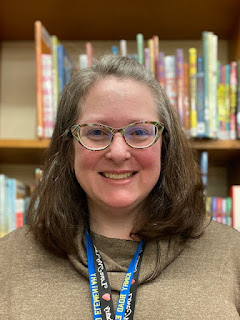
In the past, I’ve written a #SibertSmackdown Wrap-up post with tidbits from some of the schools that participated. But last year, I decided to invite educators to share reflections of their students’ experiences. And it was a great decision—teachers and librarians loved hearing directly from their colleagues. So this year, I’m doing it again. Today’s post […]
#KidsLoveNonfiction: An Update
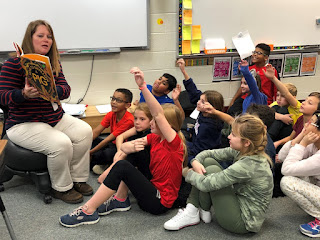
Happy Valentine’s Day! It’s the perfect day to celebrate the people and things we love. It’s also the 1-year anniversary of the #KidsLoveNonfiction campaign—an effort to raise awareness of all the wonderful nonfiction books available today and to celebrate the children who love reading them. The campaign launched with a letter asking the New York Times […]
Crafting Mega-fun Informational Writing: Voice
Like many expository literature titles, Mega-Predators of the Past has a strong, distinct voice. What exactly is voice in nonfiction writing? According to highly-regarded literacy educator Ruth Culham, voice is the personality of the writing, it’s how the writing makes the reader feel. I like to think of nonfiction voice as spanning a continuum from lively […]
Crafting Mega-fun Informational Writing: Text Structure
Most narrative nonfiction books have a chronological sequence text structure and most traditional nonfiction and browsable nonfiction titles have a description text structure, but expository literature has a broad range of text structures. That’s one of the reasons they make great mentor texts for informational writing. Mega-Predators of the Past is a blended nonfiction book […]