
Narrative Nonfiction Is 100% Verifiable
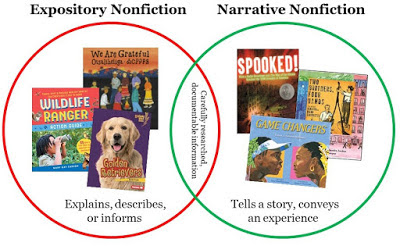
During a recent discussion on social media, I realized that some educators seem to be confused about the meaning of the term “narrative nonfiction.” First and foremost, narrative nonfiction is meticulously researched and every single fact and idea is true. In other words, the information presented in the text is 100 percent verifiable. Period. The […]
Fiction or Nonfiction? What Kids Really Like to Read
On December 11, 2020, the article “Will My Grandkids Still Love Me If I Buy Them Nonfiction?” by Jay Mathews appeared in the Washington Post. Author Cynthia Levinson posted it on the NF Fest Facebook forum, sparking a lively discussion. When Cynthia returned to the conversation a few hours later, she wrote, “I posted this in the hopes that we could respond. Anyone […]
Speaking Up for Science and Social Studies!
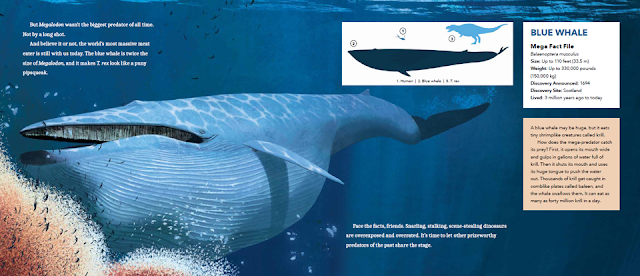
At one time, it was routine to integrate ELA lessons and content-area instruction. Then Congressed passed the No Child Left Behind Act of 2001, and everything changed. Suddenly, math and ELA instruction were prioritized, and students started taking standardized tests to track their progress. Because the school day is only so long, increasing the time […]
The Author Presence Spectrum: A Way to Understand Nonfiction’s Expansion
Today’s post, written by author Tracy Nelson Maurer, presents the Author Presence Spectrum that Tracy and Ann Henkens Matzke developed to explore the range of fiction and nonfiction children’s books available today. What do you think? Full disclosure from an author of more than 100 children’s nonfiction books: I didn’t like nonfiction when I was […]
Where Should We Shelve Informational Fiction?

Back in October 2016, I wrote this short post because I noticed that a growing number of picture book “biographies” were including invented dialog, imagined scenes, or events presented out of chronological order. Why add these made-up elements? To improve the storytelling. For the most part, the authors fully realized that these books should be […]
What’s a Pseudo-narrative?
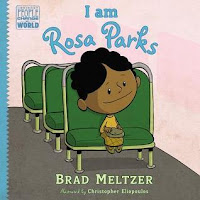
In fiction, first-person narration is powerful because it allows readers to see the world from the main character’s perspective. In recent years, some authors have tried to bring this same kind of intimacy and engagement to our understanding of historic figures by writing biographies in first person. In books like I Am Rosa Parks by […]
Nonfiction Evolution: The New Survey Book
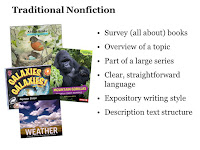
Once upon a time, all nonfiction books for children were survey (all about) books that provide a general introduction of a broad topic, such as gorillas or galaxies or weather. These books, which are often published in large series, feature concise, straightforward language. They have a description text structure and an expository writing style. Because […]
Is It Fiction or Nonfiction? A Twitterchat

Last Friday, I published this post on my blog. After reading it, author Kirsten W. Larson posted this Tweet: Deep questions: Should books that are expository and have true and verifiable information with a nonhuman narrator be considered expository fiction? I’ve always liked Melissa’s term “informational fiction” to describe these, but does it tilt the […]
Behind the Books: What Is the Heck Is Informational Fiction?
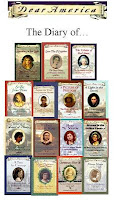
It’s a term I’m now using to describe books that share a significant amount of true, documentable information, but also have some made up parts. These books include historical fiction, like the Dear America series or Brad Meltzer’s Ordinary People Change the World series or picture book biographies with some made-up dialog or events […]