
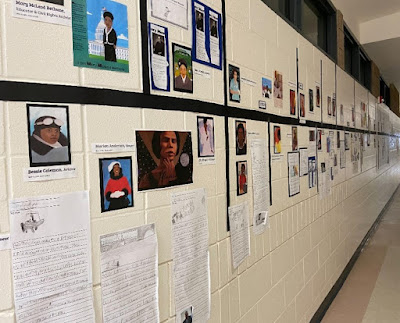
How often do you read a book because
it’s recommended by someone you know and trust? Students are no different.
That’s why book talks are a great way to get students excited about books and
reading. These 2- to 4- minute oral advertisements can make students aware of
the wide range of books available in your classroom or library collection.
Chances are you’ve done book talks to
share your passion for fiction books, but have you ever tried this technique
with nonfiction titles? If not, it’s time to give it a try. You can begin by sharing
at least one book from each category in the 5 Kinds of Nonfiction classification system over a five-week period.
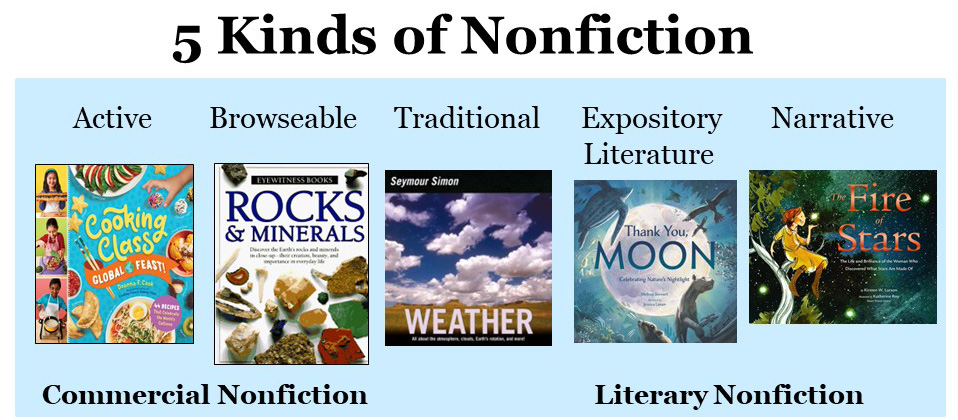
So that your enthusiasm is genuine,
choose active nonfiction books related to one of your hobbies or a skill you’d really
like to learn. Select browsable books, traditional books, and expository literature
about topics that really do make you curious, and find narrative nonfiction
titles about people you truly admire. Don’t be afraid to choose books that are
below grade level, especially if you think your striving readers might enjoy
them.
A great time to do book talks is when a
book order arrives. It helps get students excited about the new titles. Book
talks also work well during snack, right after recess, or when you have a few
extra minutes before art or P.E.
When you booktalk
nonfiction, start with a “hook” that will capture your students’ interest. Then
weave in the critical components: title, author,
illustrator, writing style (expository or narrative), format, voice, and some
info about the art. You may also want to include the book’s intended audience, 5KNF
category, and text structure.
Be sure
to share a few fascinating
facts or irresistible details. You may want to read a short excerpt or show a
visual that will engage young readers. When you’re done, display the book in an
accessible area of the room so students can take a look at it later. If you
give a book your blessing, chances are students will want to read it.
Here’s a sample book for
What If You Had Animal Ears? by
Sandra Markle:
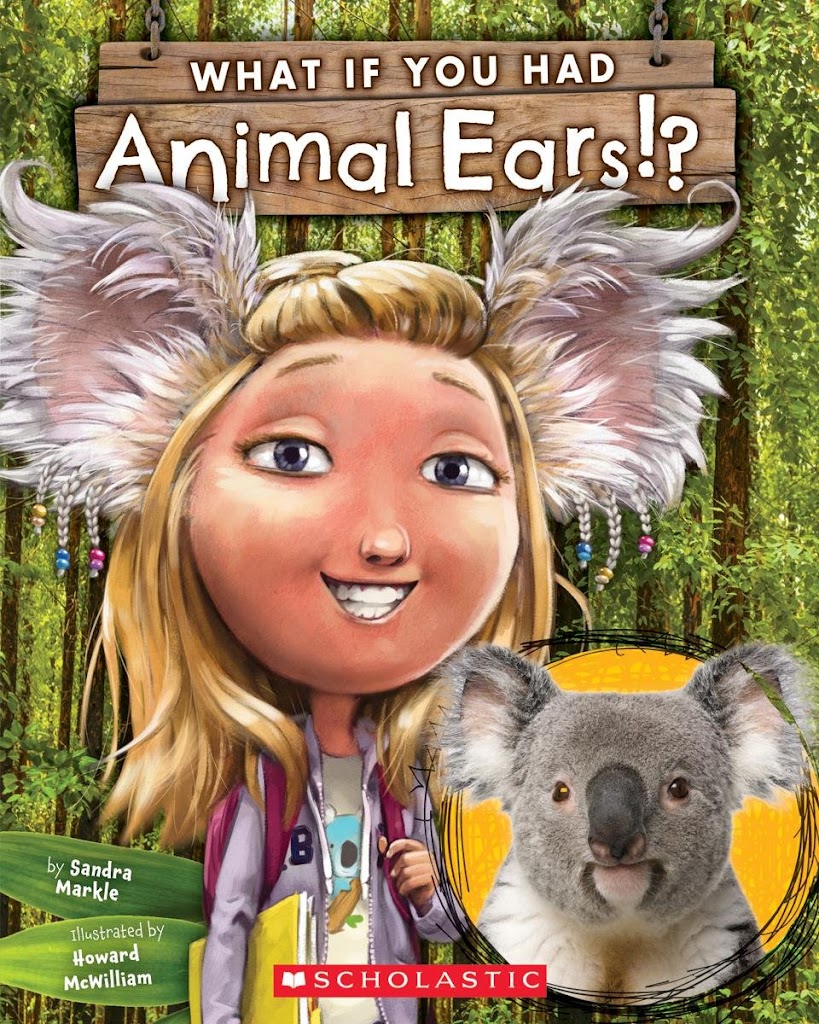
In the expository nonfiction picture book What If You Had Animal Ears, author
Sandra Markle and Howard McWilliam introduces us to eleven animals with amazing
ears. Did you know a jackrabbit’s ears give off body heat to help it stay cool?
And a Tasmanian devil’s ears blush red when its excited or upset? There’s so
much interesting information in this book, and it’s chock full of photos as
well as illustrations that will make you laugh out loud! At the end of the book,
you’ll find out what makes your ears
so special.
And another sample for my book Mega-Predators
of the Past.
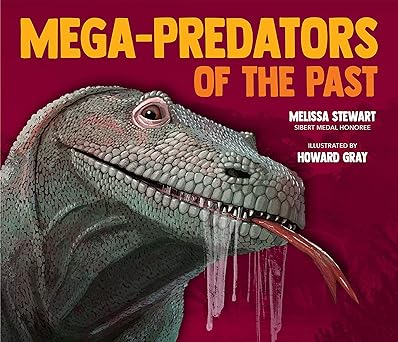
Move over dinosaurs! It’s time to meet some lesser-known prehistoric predators, including the terror bird, the giant ripper
lizard, and Titanoboa, a snake as long as a school bus.
Mega-Predators of the
Past by
Melissa Stewart and Howard Gray is an expository nonfiction picture book with a compare and contrast text structure organized from big to bigger to biggest. It features a vibrant browsable design, playful art, and text that’s sure to tickle your funny
bone. What’s the biggest mega-predator of
all time? Get ready for a surprise ending.
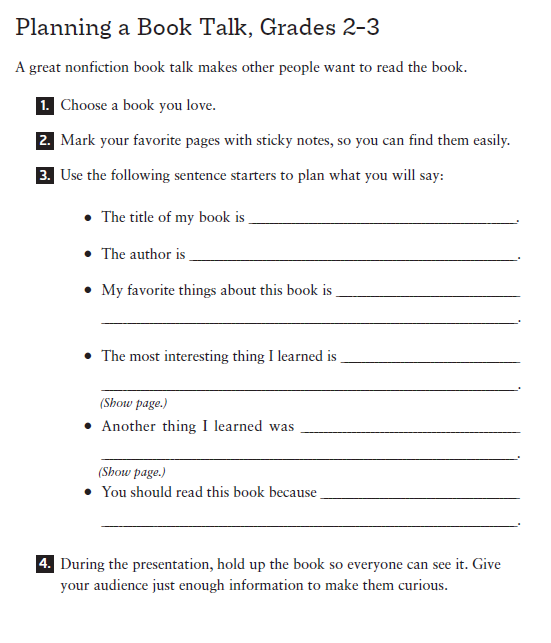
As the school year progresses, you may
want to invite students to develop their own nonfiction book talks about books
they love. These Planning a Book Talk tipsheets from 5 Kinds of Nonfiction can help.

As students listen to book talks given by
you or their classmates, encourage them to keep track of titles that sound interesting
by creating a “to-be-read” list on the last page of their reader’s notebook.
3 Responses
This is great! I'll be sharing with my mailing list.
This is great! I'm sharing it.
Thanks for sharing.